Creative Director vs. Art Director
Creative Director vs Art Director: what's the real difference? A clear breakdown of roles, responsibilities, and how they work together in agencies.
BRANDING & DESIGN
Gagan Gujral
7/31/20265 min read
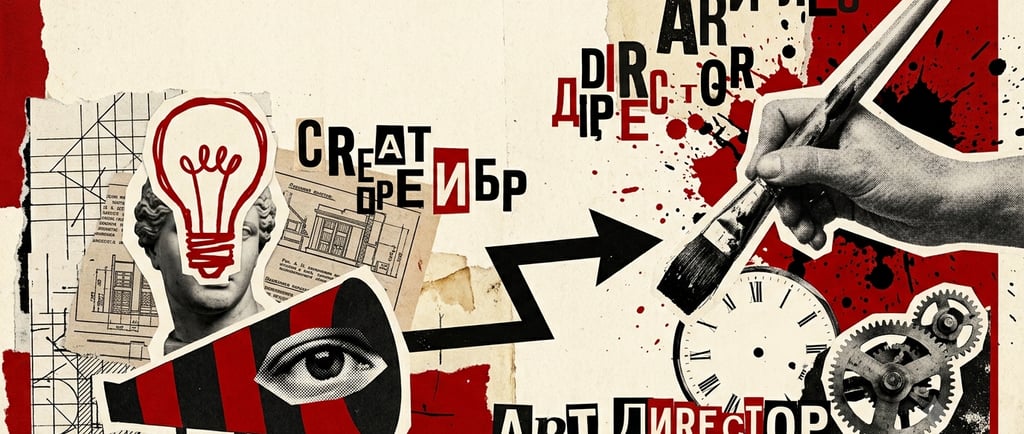
If you've ever looked at a brilliant advertising campaign, an unforgettable brand identity, or a beautifully designed website, you've probably admired the creative work—but perhaps never considered the people behind it.
Two of the most important roles responsible for that work are the Creative Director and the Art Director.
These titles are often used interchangeably, especially in smaller agencies and startups. In reality, they represent two very different levels of creative leadership. One defines the vision; the other brings that vision to life.
Understanding the distinction isn't just useful for designers—it helps business owners hire the right people, aspiring creatives map their careers, and marketing teams collaborate more effectively.
The Big Picture
The simplest way to understand the difference is this:
A Creative Director decides what the creative should achieve.
An Art Director decides how it should look.
One leads strategy. The other leads execution.
Both are indispensable.
What Does a Creative Director Do?
A Creative Director (CD) is responsible for the overall creative vision of a project, campaign, product, or even an entire brand.
Their work extends far beyond aesthetics. They ensure every creative decision aligns with business objectives, customer psychology, market positioning, and brand identity.
They're constantly asking questions like:
What story are we trying to tell?
Who is our audience?
What emotion should people feel?
How does this differentiate us from competitors?
Will this creative solve the client's business problem?
Notice that none of these questions involve fonts or colors.
That's because Creative Directors operate at the strategic level.
Responsibilities of a Creative Director
A Creative Director typically:
Develops creative strategy
Defines campaign concepts
Creates the overarching brand narrative
Aligns creative work with business objectives
Presents ideas to clients and stakeholders
Oversees multiple creative disciplines
Mentors Art Directors, Designers and Copywriters
Reviews and approves final creative work
Ensures consistency across all touchpoints
Depending on the organization, they may oversee:
Graphic Design
Branding
Advertising
Photography
Video Production
Motion Graphics
Social Media
UX/UI Design
Website Design
Packaging
Content Creation
Copywriting
The Creative Director isn't necessarily producing every asset.
They're ensuring every asset works together.
The Mindset of a Creative Director
Creative Directors think in systems rather than individual pieces.
Instead of asking,
"Is this Instagram post attractive?"
They ask,
"Does this strengthen the brand?"
Instead of,
"Does this advertisement look good?"
They ask,
"Will this campaign change customer behaviour?"
This is why Creative Directors spend much of their time in meetings, presentations, workshops, brainstorming sessions, and strategy discussions.
They're connecting creativity with commercial outcomes.
What Does an Art Director Do?
If the Creative Director creates the vision...
The Art Director makes it visible.
Art Directors are responsible for translating strategic ideas into visual experiences.
They're experts in design principles, composition, typography, colour theory, photography, illustration, layout, and visual storytelling.
Their role is hands-on.
They ensure every visual element supports the concept approved by the Creative Director.
Responsibilities of an Art Director
An Art Director typically:
Creates mood boards
Develops visual concepts
Designs layouts
Directs photographers
Guides illustrators
Reviews design work
Defines typography systems
Chooses colour palettes
Creates visual style guides
Supervises designers
Ensures consistency across assets
Oversees production quality
They spend considerably more time inside creative software and production workflows than Creative Directors typically do.
The Mindset of an Art Director
Art Directors ask different questions.
Instead of,
"What story should we tell?"
They ask,
"What's the strongest visual way to tell this story?"
Instead of,
"How should we position this brand?"
They ask,
"How should this positioning look?"
Their expertise lies in visual communication.
Creative Director vs Art Director
The Relationship Between the Two
These roles aren't competitors.
They're partners.
Imagine a new campaign for a premium watch brand.
The Creative Director may decide:
"We don't want to sell watches.
We want to sell legacy.
Every advertisement should communicate that time is the most valuable luxury."
That's strategy.
Now the Art Director takes over.
They determine:
Photography style
Lighting
Wardrobe
Typography
Colour palette
Composition
Visual hierarchy
Product placement
Image treatment
Same vision. Different responsibilities.
A Real-World Example
Suppose a company launches an electric SUV.
The Creative Director might decide:
Position it as:
"The luxury SUV for environmentally conscious leaders."
The campaign revolves around one central idea:
"Power without compromise."
Everything—from television commercials to social media posts—must reinforce this message.
The Art Director then decides:
Dark cinematic photography
Minimal typography
Rich green and black colour palette
Premium textures
Slow-motion visuals
Sophisticated lighting
High-end print layouts
The audience experiences one cohesive visual world because the Art Director has translated strategy into design.
In Advertising Agencies
A typical hierarchy might look like this:
Creative Director
↓
Associate Creative Director
↓
Art Director
↓
Senior Designer
↓
Designer
↓
Junior Designer
Alongside the visual team, Copywriters often report into Creative Directors or Creative Leads, depending on the agency structure.
In Branding Studios
Creative Directors oversee:
Brand Strategy
Identity Systems
Messaging
Positioning
Customer Experience
Art Directors focus on:
Logo systems
Colour systems
Typography
Packaging
Brand guidelines
Photography direction
Visual assets
In Film Production
A useful comparison is filmmaking.
Creative Director
Comparable to the Film Director.
Responsible for:
Story
Tone
Emotion
Audience experience
Overall creative vision
Art Director
Comparable to the Production Designer's visual execution (working closely within the art department).
Responsible for:
Sets
Props
Colour palette
Visual consistency
Physical environment
One imagines the world.
The other builds it.
In Digital Product Design
The distinction also exists in technology companies.
Creative Directors oversee:
Product storytelling
Brand experience
Marketing vision
Cross-channel consistency
Art Directors oversee:
UI aesthetics
Iconography
Illustration systems
Motion language
Design consistency
Even software products require visual leadership.
Why Small Companies Blur These Roles
Many startups simply can't afford separate leadership positions.
One experienced designer often becomes:
Creative Director
Art Director
Designer
Photographer
Video Editor
Copywriter
This works initially.
As organizations grow, specialization becomes necessary.
Large agencies separate strategy from execution because each requires different expertise.
Skills Required for a Creative Director
A successful Creative Director combines creativity with leadership and commercial thinking.
Key skills include:
Strategic thinking
Brand positioning
Storytelling
Consumer psychology
Leadership
Client management
Presentation skills
Communication
Marketing knowledge
Decision-making
Business understanding
Notice that software proficiency becomes less important at this level.
Leadership becomes the primary skill.
Skills Required for an Art Director
Art Directors remain deeply connected to craft.
Essential skills include:
Typography
Layout design
Colour theory
Photography direction
Illustration
Composition
Adobe Creative Suite
Motion principles
Visual hierarchy
Print production
Digital design systems
Their expertise is measured by execution quality.
Career Path: From Designer to Creative Director
Most creative professionals don't begin as Creative Directors.
A common progression looks like this:
Junior Designer
Learns tools, production processes, and design fundamentals.
↓
Designer
Takes ownership of projects and develops conceptual thinking.
↓
Senior Designer
Leads larger projects, mentors juniors, and refines craft.
↓
Art Director
Begins directing visual teams, shaping aesthetics, and overseeing production.
↓
Associate Creative Director (optional)
Bridges execution and strategy while managing multiple projects.
↓
Creative Director
Leads creative vision, strategy, teams, and client relationships.
↓
Executive Creative Director (ECD)
Oversees multiple Creative Directors across brands, business units, or offices.
Each step requires less emphasis on creating and more emphasis on leading.
Which Role Is Right for You?
If you enjoy:
Solving business problems
Developing ideas
Leading teams
Presenting to clients
Building brands
Creating campaigns
You may be naturally suited to becoming a Creative Director.
If you enjoy:
Designing layouts
Crafting visual systems
Directing photography
Choosing typography
Building mood boards
Perfecting aesthetics
An Art Director career may be the ideal path.
Neither role is "better."
They simply solve different problems.
Final Thoughts
Great creative work is never the result of one person alone. It emerges when vision and execution work together seamlessly.
The Creative Director provides the strategic compass, ensuring every idea supports the brand and the business.
The Art Director transforms that strategy into visuals that people can see, feel, and remember.
One answers the question:
"What should we create?"
The other answers:
"How should it look?"
When these two roles collaborate effectively, the result is work that is not only beautiful but also purposeful—creative that captures attention, communicates clearly, and drives meaningful business outcomes.
Whether you need someone to set the creative vision or bring it to life visually, our team at 1StopShop4Marketing handles both — from brand identity and logo design to packaging, photography, and web design. Get in touch to talk through your next project.
WHY US
Comprehensive solutions for your marketing needs.
Contact Us
Subscribe Now to Receive Exclusive Marketing Tips and Updates!
Hello@1stopshop4marketing.com
0091 9867000502
© 2026. All rights reserved.